
Table of Contents
What is performance marketing in digital marketing?
Digital marketing has changed the way businesses attract customers. Today, companies do not want to spend money on advertising without knowing the outcome. They want clear results, better tracking, and measurable growth. This is where performance marketing plays an important role.
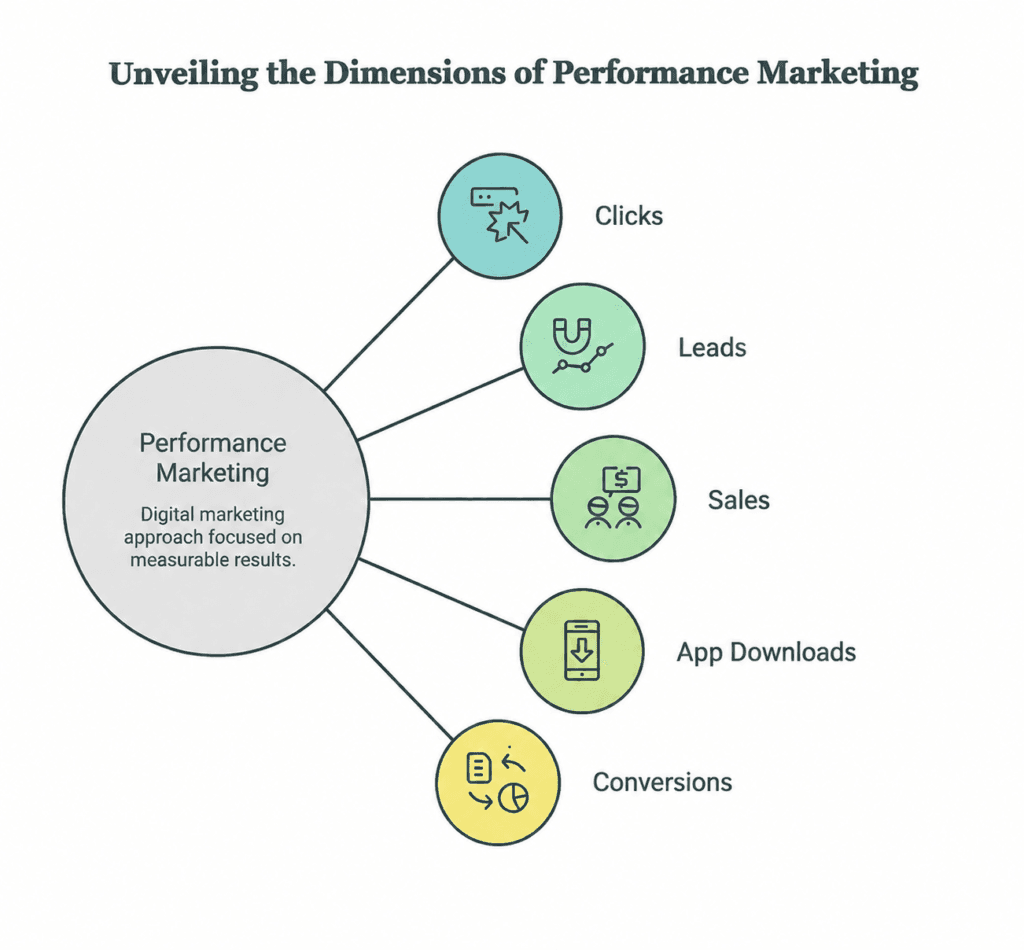
Digital marketing is a digital marketing approach where businesses pay for specific actions, such as clicks, leads, sales, app downloads, or conversions. Instead of paying only for visibility, companies invest based on the results their campaigns generate.
For example, an online store running a Google Ads campaign may pay when someone clicks on the advertisement and purchases a product. A software company may pay for advertising based on the number of qualified leads it receives.
In simple words, it helps businesses spend their marketing budget more effectively by focusing on measurable outcomes.
Meaning:
Performance marketing is a result-driven form of digital advertising where advertisers measure campaign success through specific actions. These actions can include the following.
- Website visits.
- Product purchases.
- Form submissions.
- Phone calls.
- App installations.
- Newsletter sign-ups.
Unlike traditional advertising methods where businesses pay for exposure, performance marketing focuses on what actually happens after people see an advertisement.
For example:
A clothing brand spends $1,000 on a Facebook advertising campaign. Instead of only checking how many people viewed the ad, the company tracks how many users clicked, added products to their cart, and completed purchases.
This data helps the brand understand whether the campaign is profitable.
How Does Performance Marketing Work?
With this marketing business, pay attention to real results rather than just visibility. This typically has four key points.
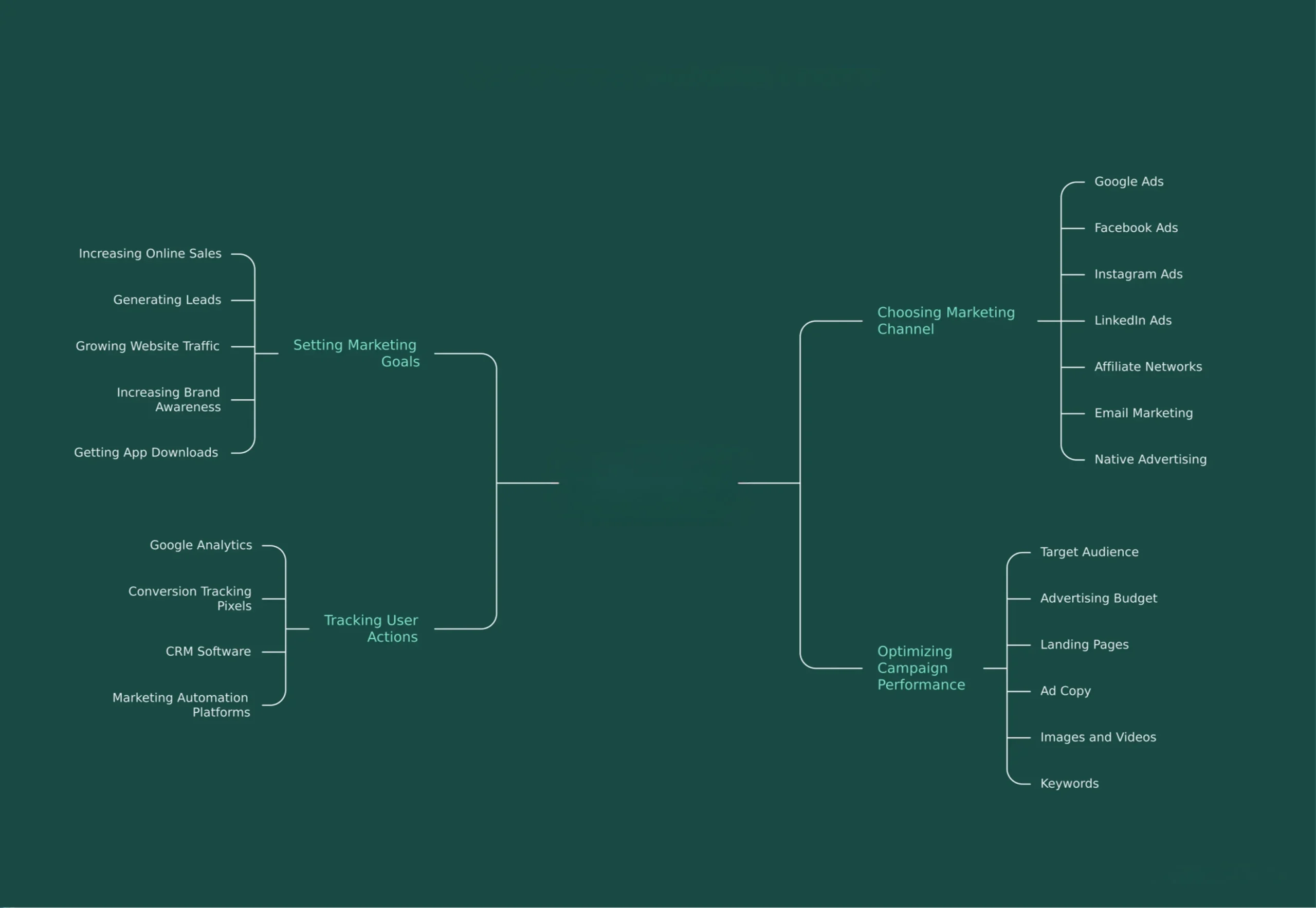
1. Setting Marketing Goals.
Before launching a campaign, businesses decide what they want to achieve.
Common goals include:
- Increasing online sales.
- Generating leads.
- Growing website traffic.
- Increasing brand awareness.
- Getting app downloads.
A clear goal helps marketers choose the right platform and strategy.
2. Choosing the Right Marketing Channel.
Businesses select platforms where their target customers spend time.
Include the following:.
- Google Ads.
- Facebook Ads.
- Instagram Ads.
- LinkedIn Ads.
- Affiliate networks.
- Email marketing campaigns.
- Native advertising platforms.
Each channel works differently depending on the business type and audience.
3. Tracking User Actions.
Performance marketing depends heavily on tracking technology.
Businesses use tools like:
- Google Analytics.
- Conversion tracking pixels.
- CRM software.
- Marketing automation platforms.
These tools help measure customer actions and understand which campaigns bring the best results.
4. Optimizing Campaign Performance.
After collecting data, marketers analyze results and improve campaigns.
They may adjust:
- Target audience.
- Advertising budget.
- Landing pages.
- Ad copy.
- Images and videos.
- Keywords.
This continuous improvement helps businesses achieve better returns from their marketing investment.
Types of Performance Marketing Channels.
Performance marketing includes different digital channels that help businesses generate measurable results.
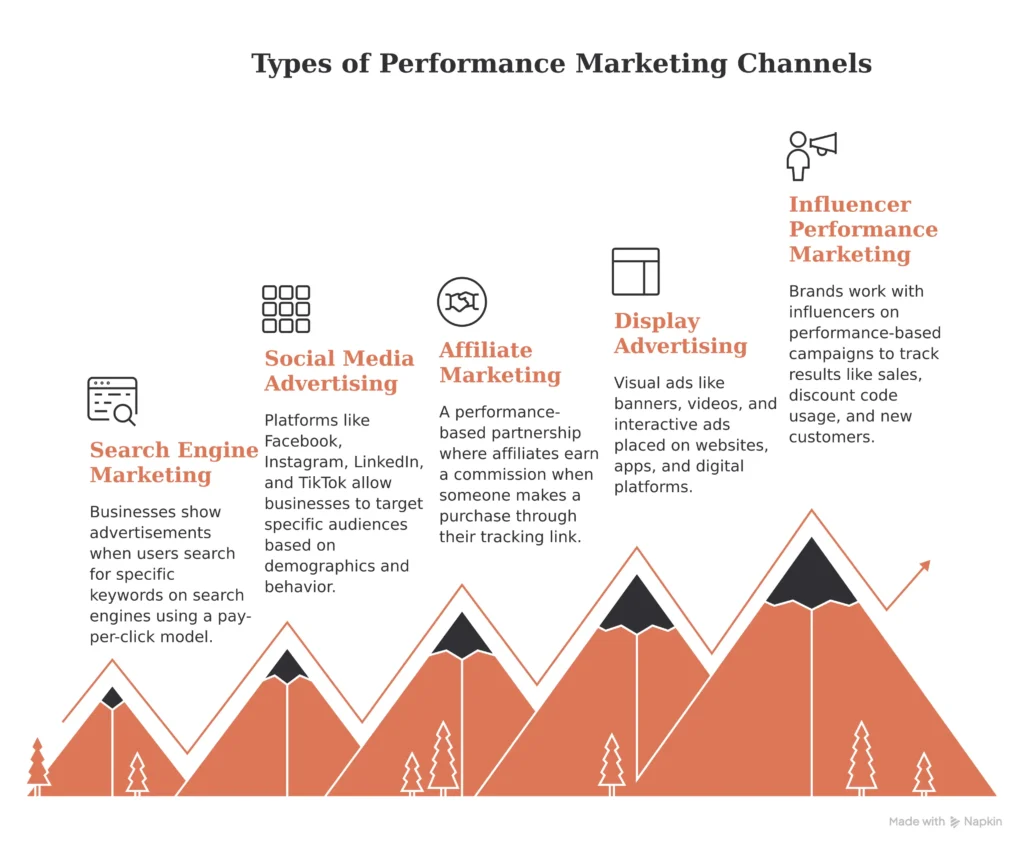
1. Search Engine Marketing (SEM).
Search engine marketing allows businesses to show advertisements when users search for specific keywords on search engines.
For example, a person searching for “best running shoes online” may see ads from sports brands.
Businesses usually pay through a pay-per-click (PPC) model, meaning they pay when someone clicks their advertisement.
2. Social Media Advertising.
Platforms like Facebook, Instagram, LinkedIn, and TikTok allow businesses to target specific audiences
- Age.
- Location.
- Interests.
- Online behavior.
- Professional background.
A fitness company, for example, can show workout-related advertisements to people interested in health and fitness. Grow your business with our services. Digital Suneetha, contact us
3. Affiliate Marketing.
Affiliate marketing is a performance-based partnership between businesses and marketers.
Affiliates promote products or services using special tracking links. When someone purchases through their link, the affiliate earns a commission.
Example:
A technology blogger reviews a laptop and adds a purchase link. If readers buy the laptop through that link, the blogger receives a commission.
4. Display Advertising.
Display advertising uses visual ads placed on websites, apps, and digital platforms.
These advertisements can include:
- Banner ads.
- Video ads.
- Interactive ads.
Businesses can track impressions, clicks, and conversions to measure campaign success. We can do eye-catching banners and AI videos for ads.
5. Influencer Marketing.
Many brands now work with influencers using performance-based campaigns.
Instead of paying only for a sponsored post, businesses track results such as:.
- Sales generated.
- Discount code usage.
- Website visits.
- New customers.
This helps brands understand the actual value created by influencer partnerships.
Key Metrics:
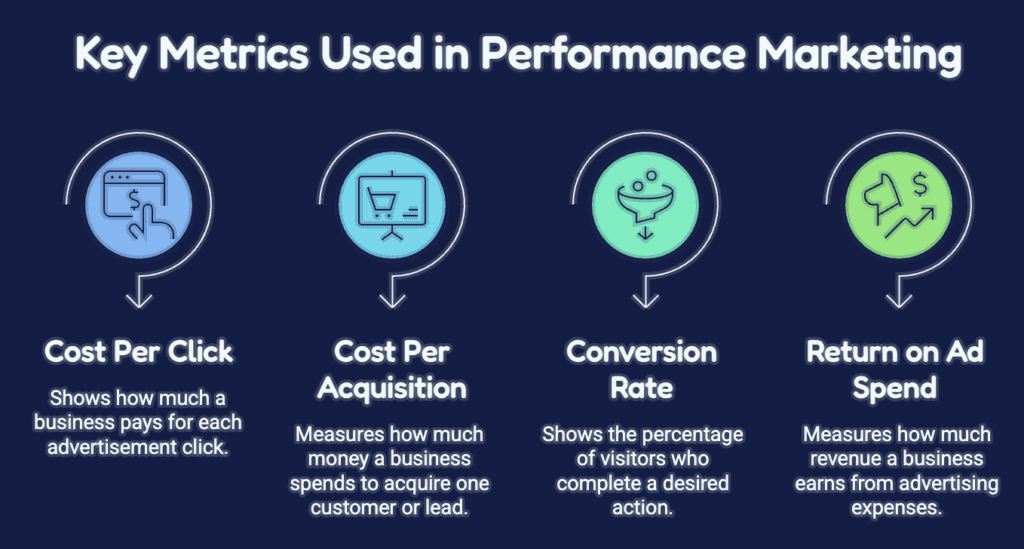
One of the biggest advantages of performance marketing is measurable data. Businesses use different metrics to evaluate campaign success.
Cost Per Click (CPC).
CPC shows how much a business pays for each advertisement click.
Formula:
Total Advertising Cost ÷ Number of Clicks = CPC.
A lower CPC usually means a campaign is attracting clicks at a lower cost.
Cost Per Acquisition (CPA).
CPA measures how much money a business spends to acquire one customer or lead.
Formula:
Total Campaign Cost ÷ Number of Conversions = CPA.
This metric helps businesses understand customer acquisition costs.
Conversion Rate.
Conversion rate shows the percentage of visitors who complete a desired action.
Examples:
- Making a purchase.
- Filling out a form.
- Booking a service.
A higher conversion rate usually indicates better campaign performance.
Return on Ad Spend (ROAS).
ROAS measures how much revenue a business earns from advertising expenses.
Example:
If a company spends $1,000 on ads and generates $5,000 in sales, the ROAS is 5x.
This metric helps businesses identify profitable campaigns
Benefits of Performance Marketing.
1. Measurable Results.
The biggest advantage of performance marketing is transparency. Businesses can clearly see where their money is going and what results they are getting.
2. Better Budget Control.
Companies can adjust their advertising spending based on campaign performance.
If a campaign performs well, businesses can increase investment. If results are poor, they can make changes or stop spending.
3. Improved Targeting.
Performance marketing allows businesses to reach specific audiences instead of showing advertisements to everyone.
This improves the chances of reaching potential customers who are more likely to convert.
4. Higher Return on Investment.
Because campaigns are optimised on real data, businesses can reduce wasted spending and improve profitability.
5. Faster Decision Making.
Real-time data allows marketers to quickly identify what works and what needs improvement.
Performance Marketing vs Traditional Digital Marketing.
| Performance Marketing | Traditional Digital Marketing |
|---|---|
| Focuses on measurable actions | Often focuses on visibility |
| Payment is based on results | Payment may be based on exposure |
| Easy to track ROI | Results can be harder to measure |
| Uses detailed analytics | May rely more on estimated reach |
| Optimized continuously | Campaign changes may happen less frequently |
Both approaches can work together. Brand awareness campaigns help businesses build recognition, while performance marketing helps generate measurable actions.
Best Strategies.
1. Understand Your Target Audience.
Successful campaigns start with knowing the following:.
- Who your customers are.
- What problems they have.
- Where they search for solutions.
- What motivates them to buy.
2. Create High-Quality Landing Pages.
A great advertisement can fail if the landing page does not convince visitors.
A good landing page should have the following:.
- Clear messaging.
- Strong call-to-action.
- Fast loading speed.
- Easy navigation.
- Trust signals.
3. Test Different Campaign Elements.
Marketers should test the following:
- Headlines.
- Images.
- Videos.
- Audience groups.
- Offers.
Small improvements can create significant results over time.
4. Focus on Data Analysis.
Successful marketing requires regular monitoring.
Businesses should analyse the following:.
- Customer behaviour.
- Conversion data.
- Campaign costs.
- Revenue generated.
Common Mistakes
Ignoring Data.
Running campaigns without analyzing performance can lead to wasted budgets.
Targeting the Wrong Audience.
Even a great advertisement will fail if it reaches people who are not interested.
Focusing Only on Clicks.
Clicks are important, but conversions and revenue matter more.
Not Optimizing Landing Pages.
Poor website experiences can reduce conversions even when ads perform well.
Future of Performance Marketing.
It will continue to grow as businesses demand more accountability from their advertising investments.
Future trends include:.
- Artificial intelligence-powered campaign optimization.
- Personalized customer experiences.
- Better marketing automation.
- Predictive analytics.
- Privacy-focused tracking solutions.
AI tools are helping marketers analyze large amounts of data and make faster decisions. However, human strategy and creativity remain important for building campaigns that connect with customers. Take the help of AI, but don’t depend on AI 100%. Use human thinking and brainstorming.
Frequently Asked Questions?
What is performance marketing in digital marketing?
Performance marketing in digital marketing is a strategy where businesses pay based on measurable results such as clicks, leads, sales, or conversions instead of only paying for advertisement exposure.
Is performance marketing suitable for small businesses?
Yes. Small businesses can use performance marketing because they can control their budget, target specific audiences, and measure exactly what results they receive.
What platforms are used for performance marketing?
Popular performance marketing platforms include Google Ads, Meta Ads, LinkedIn Ads, affiliate networks, email marketing platforms, and other digital advertising channels.
How do you measure performance marketing success?
Businesses measure success using metrics like conversion rate, cost per acquisition (CPA), cost per click (CPC), and return on ad spend (ROAS).
What is the difference between SEO and performance marketing?
SEO focuses on improving organic visibility in search engines over time, while performance marketing uses paid channels to generate measurable results through advertising campaigns.
Conclusion.
Performance marketing has become one of the most effective ways for businesses to grow online because it focuses on Real results. Instead of spending money without knowing the outcome, companies can track customer actions, optimize campaigns, and improve their return on investment.
Whether a business wants more sales, leads, or website visitors, performance marketing provides a data-driven approach to achieve marketing goals.
When combined with strong content, analytics, and customer understanding, it can become a powerful tool for sustainable digital growth.